

6 Factors To Help You Decide Wether Adopting A Puppy Or An Adult Dog

Hi again doggists!
Now that Christmas is coming, it is common that many people are thinking about getting a dog. On the one hand, it is great to have these weeks of adaptation for their arrival, but on the other hand it is important to remember that a dog is not a toy, it is a life and it is a commitment for life.

That said, what is better to adopt, an adult dog or a puppy?
Well, let's take a look at the advantages and disadvantages of each one and see if this will help you to evaluate which is better for your particular case :)
1- TIME
Puppies need a lot of time and dedication from their human guardians. They can not be left alone until at least 6-7 months because they really have a very hard time and can affect their mental and emotional development. Think for a moment if you would see normal to leave a 5 year old child alone at home. The puppy needs constant care and supervision. In nature puppies are never left alone, there is always one of the two parents present.
The basic need of the dog as a species is contact, dogs are gregarious, social animals. That means that although it is no longer a puppy still shouldn't be left many hours alone.
You will also need to spend your time and energy with an adult dog, especially when you bring him/her home the first weeks. Keep in mind teaching him/her progressively to be left alone, don't do it suddenly. It would be nice if you would manage to get holidays or a few days off and organize for someone to be there with the dog when you had to leave. But overall an adult dog best fits your lifestyle and schedule.
2- POTTY TRAINING
Puppies need to pee approximately every 2 hours, and at least twice overnight. If you want to teach your puppy well where to pee and poo, you have to anticipate and be aware to bring him to the chosen place. That includes waking at night too at first. Keep in mind that you're gonna do lots of cleaning and do not expect a puppy to hold their pee because they simply can not, they just don't have complete control over their sphincters yet.
Most adult dogs from shelters come potty trained. In fact many of them will hold their needs until volunteers walk them out. If this is not the case, you can teach these habits within days.
3 - SOCIALIZATION

Puppies should be gradually exposed to many stimuli / situations as they grow as adults to be balanced, confident, fearless dogs. This implies introduce the puppy from dogs of various sizes, ages, colors seniors with canes, wheelchairs, umbrellas, helmets, kids, scooters, carts, etc.
It is important to do it slowly, one day at a time, do not overstimulate the puppy.
There are adult dogs at the shelter that are already well socialized, but there are also many who have not had a proper socialization when they were puppies. Of course you'll have to give the dog some time to learn that all these other dogs, people and foreign objects are good and they are not a threat.
4 - EDUCATION
Puppies have to be educated from 0 and gradually. They can take classes for puppies from 3.5 months old. Notice that a puppy has short attention spans and is still developing muscles, therefore I don't recommend obedience classes, but classes where you get tools for good coexistence with your puppy.
Adult dogs also need a basic education to behave in human society. You can contact a professional for private or group sessions, but make sure that their methods are based on positive reinforcement and have nothing to do with dominance, use of force or control of the dog.
5 - CHEWING
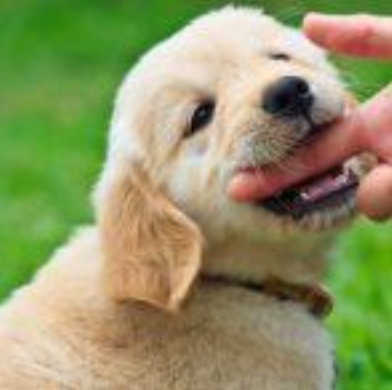
Puppies need to chew on things. His teeth are growing and learning how and how much they can squeeze. You have to make sure your home is puppy proof: no cables, controls, mobiles, books or shoes in the middle, etc. In case you have got a puppy too young and therefore she/he won't have been with the mother and siblings enough, you will also have to teach her/him to control her/his jaws. You must inform yourself about how to train bite inhibition.

Adult dogs generally don't have much desire to nibble as puppies do, so they are easier to handle at home, but be aware they also may have the instinct. So make sure before leaving the dog unsupervised and let him/her several toys with different textures to chew whenever she/he feels like.
6 - THEN WHAT ARE YOU GETTING?
You can not be sure how much a puppy will grow or how her/his personality will be.
In contrast with an adult dog, what you see is what you get. You know how she/he looks, how big or how small and how her/his character is.
Just to make it clear, all dogs can be educated.
Age doesn't matter. Older dogs also learn!
Now you can analyse your particular situation and see what suits you best.
Remember that all of them are going to need time, patience and much love!
So go adopt one, they are waiting for you!!
Belen
Comments